Semaglutide
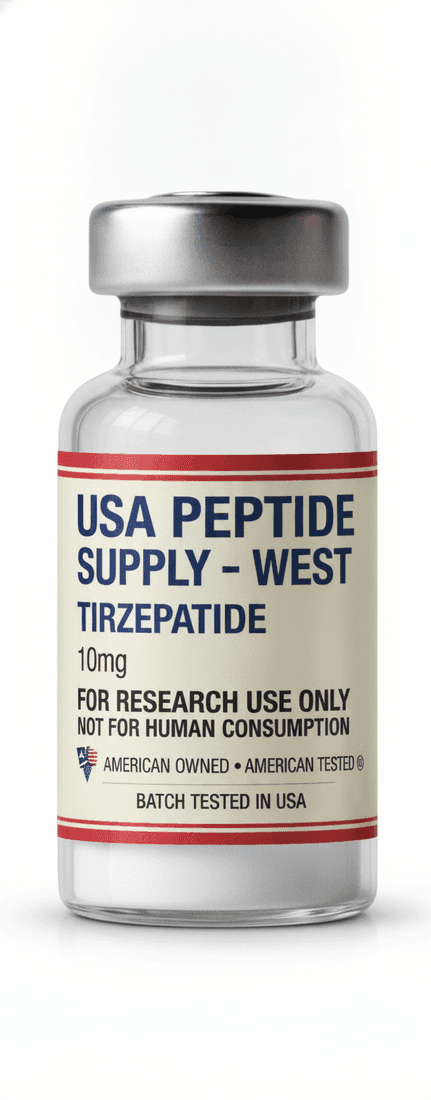
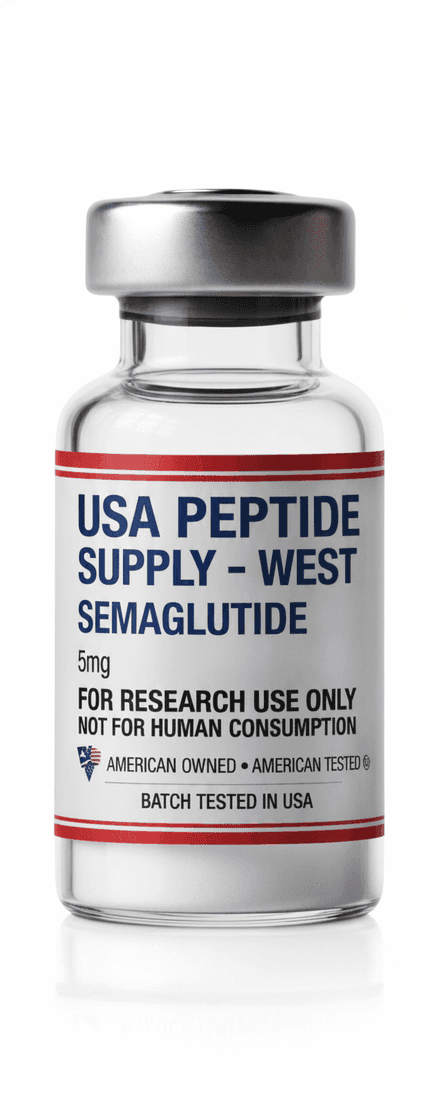
Semaglutide is a 31-residue GLP-1 receptor agonist analog with a C18 fatty-acid acylation that extends plasma half-life. It is one of the most heavily characterized reference compounds in GLP-1 receptor pharmacology.
The standard single-receptor GLP-1 baseline for comparative incretin research.
What it is
Semaglutide is a synthetic analog of human GLP-1(7-37) with amino-acid substitutions and a C18 diacid linker that confers albumin binding and an extended plasma half-life.
It is widely used as a mono-agonist reference standard in GLP-1 receptor signaling and incretin pharmacology research. For laboratory use only.
Reconstitution & storage
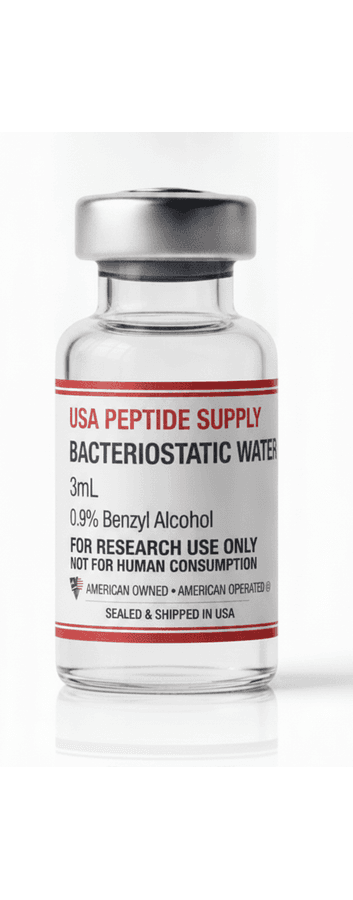
- Reconstitute with bacteriostatic water — add slowly down the vial wall and swirl gently; do not shake.
- Store lyophilized vials at -20°C; once reconstituted keep at 2–8°C and use within 16 weeks.
- Protect from light and avoid repeated freeze–thaw cycles.
Cited research applications
Questions
Compound identifiers & literature
Public database identifiers and a selection of peer-reviewed publications for Semaglutide, provided so researchers can verify this compound independently. Each entry links to the primary source.
Selected literature
- [1]Lau J, Bloch P, Schäffer L, et al. (2015). Discovery of the Once-Weekly Glucagon-Like Peptide-1 (GLP-1) Analogue Semaglutide Journal of Medicinal Chemistry 2015;58(18):7370-80.Describes the medicinal-chemistry design of the molecule and characterizes GLP-1 receptor potency, albumin affinity and resistance to DPP-4 degradation in cell-based assays, reporting receptor affinity slightly lower than liraglutide alongside substantially increased albumin affinity, with pharmacokinetic measurements in rats and mini-pigs reporting an intravenous plasma half-life of 46.1 hours and a mean residence time of 63.6 hours after subcutaneous dosing in mini-pigs.in vitro and rodent (with additional mini-pig pharmacokinetics; not a primate study)PMID 26308095DOI
- [2]Marso SP, Bain SC, Consoli A, et al. (2016). Semaglutide and Cardiovascular Outcomes in Patients with Type 2 Diabetes New England Journal of Medicine 2016;375(19):1834-1844.A 104-week multicenter, randomized, double-blind, placebo-controlled noninferiority trial (SUSTAIN-6) in 3,297 adults with type 2 diabetes that measured a composite endpoint of cardiovascular death, nonfatal myocardial infarction or nonfatal stroke, recording the endpoint in 6.6% of the semaglutide group versus 8.9% of placebo (hazard ratio 0.74), and recording significantly higher rates of retinopathy complications in the semaglutide group (hazard ratio 1.76, P=0.02).
- [3]Wilding JPH, Batterham RL, Calanna S, et al. (2021). Once-Weekly Semaglutide in Adults with Overweight or Obesity New England Journal of Medicine 2021;384(11):989-1002.A 68-week multicenter, randomized, double-blind, placebo-controlled trial (STEP 1) in 1,961 adults without diabetes and with a BMI of 30 or higher (or 27 or higher with a weight-related coexisting condition), measuring percentage change in body weight as a co-primary endpoint and reporting a mean change of -14.9% with semaglutide versus -2.4% with placebo, both arms receiving a lifestyle intervention, with nausea and diarrhea the most common adverse events and discontinuation for gastrointestinal events in 4.5% of the semaglutide group versus 0.8% of placebo.
- [4]Lincoff AM, Brown-Frandsen K, Colhoun HM, et al. (2023). Semaglutide and Cardiovascular Outcomes in Obesity without Diabetes New England Journal of Medicine 2023;389(24):2221-2232.A multicenter, randomized, double-blind, placebo-controlled event-driven superiority trial (SELECT) in 17,604 adults aged 45 or older with preexisting cardiovascular disease and a BMI of 27 or higher but no history of diabetes, measuring a composite cardiovascular endpoint over a mean follow-up of 39.8 months and reporting events in 6.5% of the semaglutide group versus 8.0% of placebo (hazard ratio 0.80), with adverse events leading to discontinuation in 16.6% versus 8.2% respectively.
- [5]Gabery S, Salinas CG, Paulsen SJ, et al. (2020). Semaglutide lowers body weight in rodents via distributed neural pathways JCI Insight 2020;5(6):e133429.A preclinical mechanistic study in diet-induced obese mice and rats, using Glp1r-knockout mice in the distribution experiments, that mapped central nervous system access and neuronal activation across brain regions, reporting that the compound accessed the brainstem, septal nucleus and hypothalamus via the circumventricular organs rather than by crossing the blood-brain barrier, and that reduced food intake and weight loss occurred without a decrease in energy expenditure.
These references are provided for scientific context only. They describe published research on this compound and are not evidence of safety or efficacy, not an endorsement of any use, and not medical advice. This product is supplied for laboratory research use only — not for human or animal consumption.
Related compounds
For Research Use Only. Not for human or animal consumption. This product has not been evaluated by the Food and Drug Administration. Not intended to diagnose, treat, cure, or prevent any disease. Semaglutide is sold strictly as a research chemical for in-vitro and pre-clinical laboratory investigation only.