Thymosin α-1
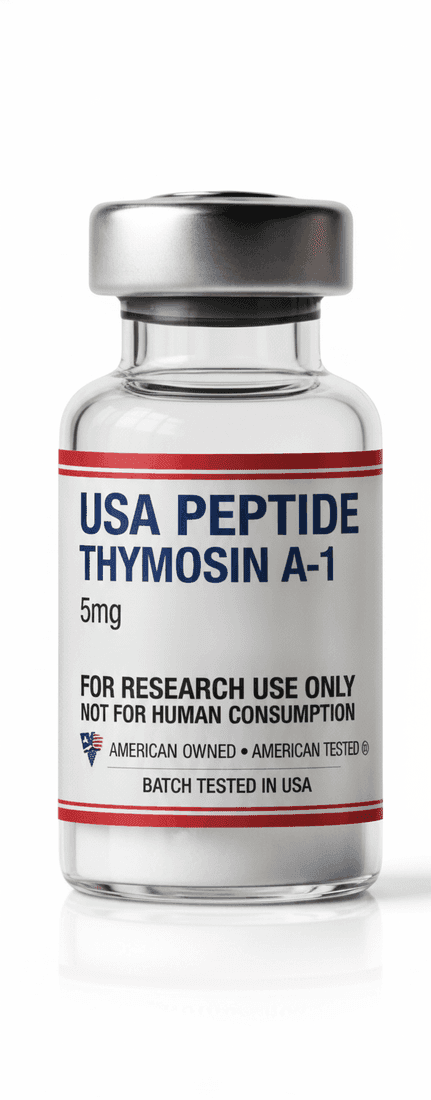
Thymosin α-1 is a 28-residue N-acetylated peptide cleaved from prothymosin alpha. It is a reference tool compound in T-cell maturation and innate-immune signaling research.
The standard reference peptide for T-cell maturation assays.
What it is
Thymosin α-1 is an N-terminally acetylated 28-amino-acid peptide cleaved from prothymosin alpha, originally isolated from thymic tissue.
It is used as a reference compound in pre-clinical immunology research, including T-cell maturation and TLR-pathway signaling assays. Supplied for laboratory use only.
Reconstitution & storage
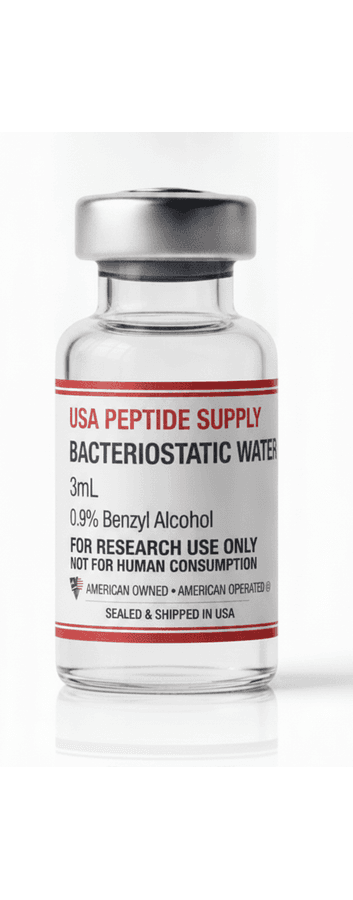
- Reconstitute with bacteriostatic water — add slowly down the vial wall and swirl gently; do not shake.
- Store lyophilized vials at -20°C; once reconstituted keep at 2–8°C and use within 16 weeks.
- Protect from light and avoid repeated freeze–thaw cycles.
Cited research applications
Questions
Compound identifiers & literature
Public database identifiers and a selection of peer-reviewed publications for Thymosin alpha-1, provided so researchers can verify this compound independently. Each entry links to the primary source.
Selected literature
- [1]Romani L, Bistoni F, Gaziano R, Bozza S, Montagnoli C, Perruccio K, Pitzurra L, Bellocchio S, Velardi A, Rasi G, Di Francesco P, Garaci E (2004). Thymosin alpha 1 activates dendritic cells for antifungal Th1 resistance through toll-like receptor signaling Blood.Using cultured fungus-pulsed dendritic cells and inbred mouse models of invasive aspergillosis following hematopoietic transplantation, the authors examined thymosin alpha-1 signaling through Toll-like receptor pathways and measured dendritic cell maturation, interleukin-12 production, and Th1 polarization.
- [2]Wu J, Zhou L, Liu J, Ma G, Kou Q, He Z, et al. (2013). The efficacy of thymosin alpha 1 for severe sepsis (ETASS): a multicenter, single-blind, randomized and controlled trial Critical Care.A multicenter single-blind randomized controlled trial at six teaching hospitals in China assigned 361 patients with severe sepsis to subcutaneous thymosin alpha-1 plus conventional therapy or conventional therapy alone. All-cause 28-day mortality was 26.0% in the thymosin alpha-1 group and 35.0% in the control group (relative risk 0.74, 95% CI 0.54 to 1.02). The unstratified comparison did not reach statistical significance (P = 0.062), while the reported log-rank test gave P = 0.049. Monocyte HLA-DR expression differed between groups at days 3 and 7.
- [3]Ke L, Zhou J, Mao W, Chen T, et al. (Chinese Acute Pancreatitis Clinical Trials Group) (2022). Immune enhancement in patients with predicted severe acute necrotising pancreatitis: a multicentre double-blind randomised controlled trial Intensive Care Medicine.A multicentre double-blind placebo-controlled randomized trial assigned 508 patients with predicted severe acute necrotising pancreatitis to subcutaneous thymosin alpha-1 or placebo, 254 per group. Infected pancreatic necrosis occurred during index admission in 15.7% of the thymosin alpha-1 group and 18.1% of the placebo group (difference -2.4%, 95% CI -7.4 to 5.1; P = 0.48). The authors report that the treatment did not reduce the incidence of the primary endpoint.
- [4]Wu J, Pei F, Zhou L, Li W, Sun R, Li Y, et al. (2025). The efficacy and safety of thymosin α1 for sepsis (TESTS): multicentre, double blinded, randomised, placebo controlled, phase 3 trial BMJ.A multicentre double-blind placebo-controlled phase 3 trial randomised 1,106 adults with sepsis across 22 centres in China to subcutaneous thymosin alpha-1 or placebo every 12 hours for seven days. In the modified intention-to-treat population (n = 1,089), 28-day all-cause mortality was 23.4% with thymosin alpha-1 and 24.1% with placebo (hazard ratio 0.99, 95% CI 0.77 to 1.27; P = 0.93). The trial reported no clear evidence of an effect on its primary endpoint.
- [5]Camerini R, Garaci E (2015). Historical review of thymosin α 1 in infectious diseases Expert Opinion on Biological Therapy.A historical review surveying the clinical trial literature on thymosin alpha-1 across infectious disease settings including hepatitis B, hepatitis C, sepsis, and aspergillosis in bone marrow transplant recipients, and discussing unresolved questions of dose, treatment schedule, and combination regimens.
These references are provided for scientific context only. They describe published research on this compound and are not evidence of safety or efficacy, not an endorsement of any use, and not medical advice. This product is supplied for laboratory research use only — not for human or animal consumption.
Related compounds
For Research Use Only. Not for human or animal consumption. This product has not been evaluated by the Food and Drug Administration. Not intended to diagnose, treat, cure, or prevent any disease. Thymosin α-1 is sold strictly as a research chemical for in-vitro and pre-clinical laboratory investigation only.