MOTS-c
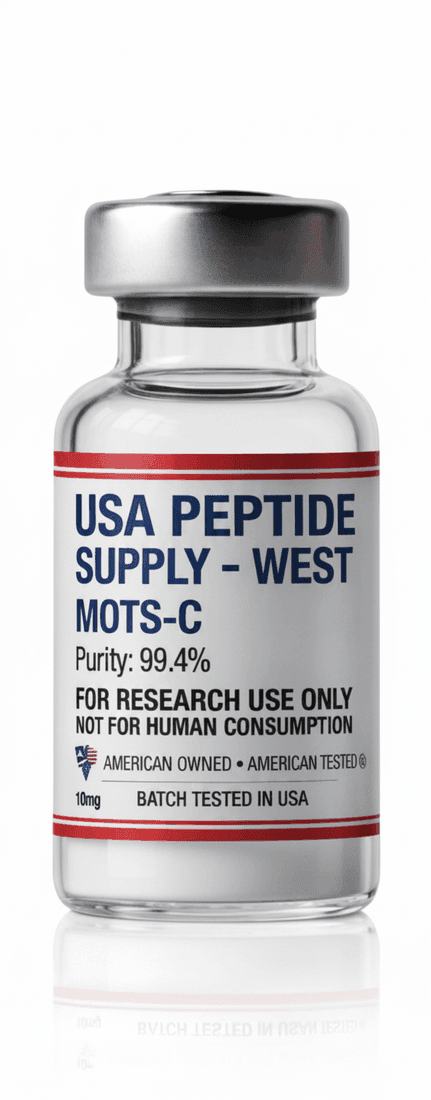
MOTS-c is a 16-residue peptide encoded by the mitochondrial 12S rRNA region. It is the headline reference compound for mitochondrial-derived-peptide and AMPK-pathway signaling research.
The benchmark mitochondrial-derived peptide for AMPK-pathway studies.
What it is
MOTS-c (Mitochondrial ORF of the Twelve-S rRNA type-c) is a 16-amino-acid peptide encoded within the mitochondrial genome — one of the best-characterized mitochondrial-derived peptides.
It is studied as a tool compound in AMPK-pathway signaling, metabolic-homeostasis models, and exercise-biology research. Supplied for laboratory use only.
Reconstitution & storage
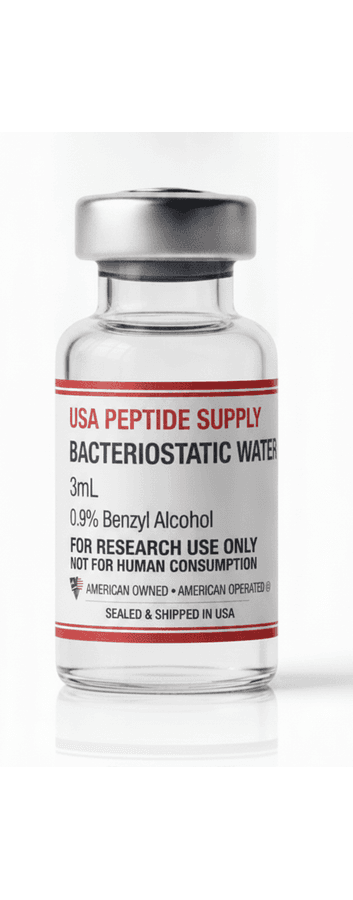
- Reconstitute with bacteriostatic water — add slowly down the vial wall and swirl gently; do not shake.
- Store lyophilized vials at -20°C; once reconstituted keep at 2–8°C and use within 16 weeks.
- Protect from light and avoid repeated freeze–thaw cycles.
Cited research applications
Questions
Compound identifiers & literature
Public database identifiers and a selection of peer-reviewed publications for MOTS-c (Mitochondrial ORF of the 12S rRNA type-c), provided so researchers can verify this compound independently. Each entry links to the primary source.
Selected literature
- [1]Lee C, Zeng J, Drew BG, Sallam T, Martin-Montalvo A, et al. (2015). The mitochondrial-derived peptide MOTS-c promotes metabolic homeostasis and reduces obesity and insulin resistance Cell Metabolism.Reports the identification of MOTS-c as a 16-amino-acid peptide encoded within the mitochondrial 12S rRNA region and characterizes its effects on the folate cycle, tethered de novo purine biosynthesis and AMPK activation at the cellular level and in mice, including age-dependent and high-fat-diet-induced insulin resistance models.
- [2]Kim KH, Son JM, Benayoun BA, Lee C (2018). The Mitochondrial-Encoded Peptide MOTS-c Translocates to the Nucleus to Regulate Nuclear Gene Expression in Response to Metabolic Stress Cell Metabolism.Reports that MOTS-c translocates from the mitochondria to the nucleus following metabolic stress in an AMPK-dependent manner, and that it regulates a broad range of nuclear genes in response to glucose restriction, including genes carrying antioxidant response elements (ARE), with interaction reported between MOTS-c and ARE-regulating transcription factors such as NFE2L2/NRF2.
- [3]Reynolds JC, Lai RW, Woodhead JST, Joly JH, Mitchell CJ, et al. (2021). MOTS-c is an exercise-induced mitochondrial-encoded regulator of age-dependent physical decline and muscle homeostasis Nature Communications.Reports that administered MOTS-c altered physical performance in young (2 month), middle-aged (12 month) and old (22 month) mice, and describes effects on nuclear gene expression, skeletal muscle metabolism and myoblast adaptation to metabolic stress in cultured cells; a separate late-life intermittent dosing arm (initiated at 23.5 months, 3x/week) reported changes in physical capacity and healthspan in mice. In humans, the study measured endogenous MOTS-c expression in skeletal muscle and circulation following exercise; no MOTS-c was administered to human subjects.rodent and in vitro; separate observational (non-interventional) human exercise samplingPMID 33473109DOI
- [4]Yin Y, Pan Y, He J, Zhong H, Wu Y, et al. (2022). The mitochondrial-derived peptide MOTS-c relieves hyperglycemia and insulin resistance in gestational diabetes mellitus Pharmacological Research.Evaluates daily MOTS-c administration during pregnancy in a mouse model of gestational diabetes established by short-term high-fat diet combined with low-dose streptozotocin, reporting measured changes in hyperglycemia, insulin sensitivity, glucose tolerance, offspring birth weight and offspring mortality, together with in vitro measurement of glucose uptake in cultured cells.
- [5]Zheng Y, Wei Z, Wang T (2023). MOTS-c: A promising mitochondrial-derived peptide for therapeutic exploitation Frontiers in Endocrinology.Narrative review summarizing the discovery, reported physiological functions and preclinical literature on MOTS-c across metabolic, cardiovascular, inflammatory and ageing contexts, and discussing proposed therapeutic exploitation. Contains no original experimental data.
These references are provided for scientific context only. They describe published research on this compound and are not evidence of safety or efficacy, not an endorsement of any use, and not medical advice. This product is supplied for laboratory research use only — not for human or animal consumption.
Related compounds
For Research Use Only. Not for human or animal consumption. This product has not been evaluated by the Food and Drug Administration. Not intended to diagnose, treat, cure, or prevent any disease. MOTS-c is sold strictly as a research chemical for in-vitro and pre-clinical laboratory investigation only.